Minimal kit
Light pack
Small bag only
- CarriesEssentials for the trip
- StoredMain bag stays aboard
- ProtectSecure dry bag
Checklist to tick off
El Nido to Coron expedition by bangka
★ 4.8 · 570 guest reviews
Summary
On the El Nido to Coron sailing trip, bring a secure dry bag, a small day bag, cash for the fees, seasickness tablets and a charged power bank.
Packing in brief
Checklist: 10 items
Tick each item when it is done. Your place is saved on this device.
0 / 10 ready
Everything is ready. Only your direction and your start date are left to choose.
Save a placeA packing list built from the listings: the main and small bags, the dry bag, cash for local fees, the huts, the missing signal and the small extras that make a boat trip easier.
Editorial team, elnidotocoron.quest · Updated November 23, 2026 · Quick read: 7 min
Essentials
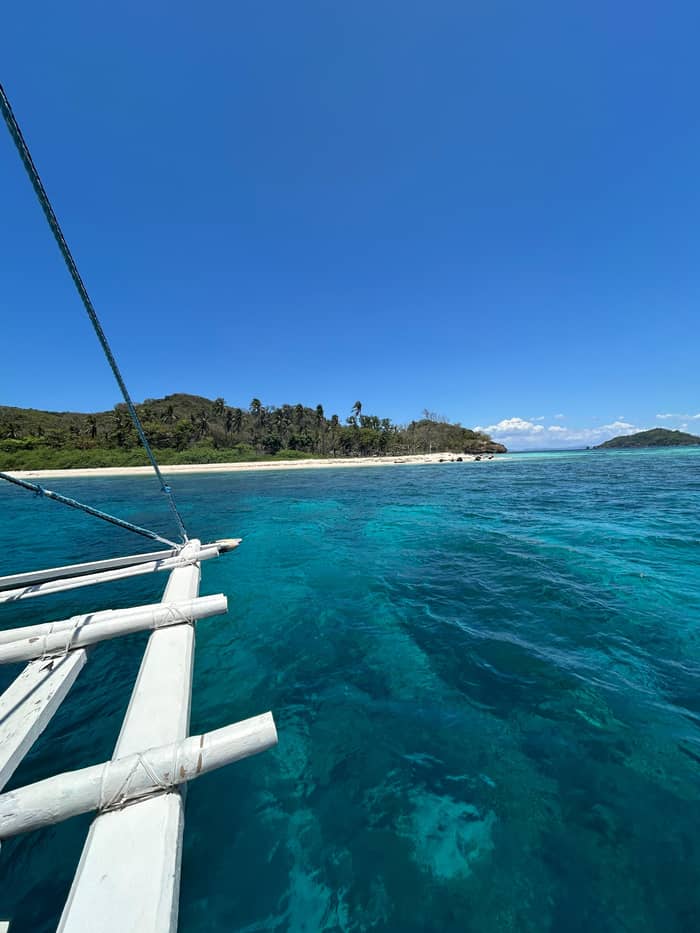
People search for this crossing as a sailing trip, a speed boat or a cruise, and the real thing is simpler than any of those. The site's listing describes a traditional Filipino bangka, an outrigger boat that carries guests between island camps over 3 days and 2 nights. That description sets the packing logic: light, dry and simple, with comfort limited to what the boat and the huts provide.
The listing implies a main bag and a small bag. The big bag is stowed on the boat for the full trip and the record sets no weight or size cap, while a smaller bag with the day's essentials is what comes to the camps. Pack the small bag as if it were a weekend away: clothes, toiletries and anything you cannot do without. Leave the rest in the main luggage and forget it until Coron.
A secure dry bag is the one item the operator singles out. Another operator's record agrees, advising a dry bag to protect electronics and valuables from sea spray. Think of it as the first thing to buy or borrow. A good dry bag costs little, weighs almost nothing and protects the items a boat day can ruin, which are your phone, your wallet and your passport. Test the closure at home by filling it with water or a towel and rolling the top down properly.
Packing list
| Item | Why it helps | Source |
|---|---|---|
| Dry bag | Protects the small bag from sea spray | Operator advice |
| Small bag | Carries essentials ashore | Main luggage stays on board |
| Cash | Pays the cash-only fees | Fees listed by place |
| Motion sickness tablets | Eases seasickness | Advised in one record |
| Power bank | Covers the missing mains power | Minimal electricity aboard |
| Travel insurance | Covers a remote trip | Advised in one record |
The listings give the reason for each item in their own words, and the table restates them briefly, so check the operator's own packing note at booking.
The phrase El Nido to Coron speed boat suggests a quick ride, but the listing describes something else. The boat is a bangka, and the trip takes 3 days and 2 nights, with camps on islands in between. Nothing in the record promises a fast crossing or a cabin, so pack for slow travel and for time spent on deck in sun and spray. Pack a hat and a wrap for the sun, and treat comfort as something you add with small things rather than with a bigger bag.
A cruise would suggest a ship with cabins, and the record describes something else. The record describes simple camps and says plainly that the experience is not suitable for travelers seeking luxury or constant connectivity. That honest line is also a packing hint: a trip without luxury needs few luxuries in the bag. Leave the heavy camera tripod, the spare pair of formal shoes and anything that cannot get wet at home or in the main luggage.
Seasickness deserves a thought before you leave. A record for a 3-day crossing recommends carrying travel sickness tablets if the sea tends to upset you. The same record says to check weather conditions before departure, to respect local wildlife and marine life, and to stay hydrated and protect yourself from the sun. Ask a pharmacist in El Nido or Coron for suitable tablets if you forgot to pack your own.
Local fees
Figures are the fees in Philippine pesos that the longer crossing's record lists for each place.
Money matters on a boat with no cash machine. The Linapacan and Culion record is blunt about money: bring cash, because the sea has no ATMs, and the ETDF fees can only be paid in cash. Read that as a rule for the whole route: change enough money before you reach the boat and keep it dry in the dry bag. Break larger notes into smaller ones in town, since fees and tips are easier to pay with change.
Fees depend on the place. For the 4-day trip the record shows El Nido at PHP 400, Culion at PHP 100, and PHP 200 apiece for Coron and Linapacan, all as environmental fees. The Coron to El Nido record says valid environmental tickets are a government requirement for all four places, and that the operator can process them if you do not already hold them. Ask at the briefing which of them the operator handles for you.
Two smaller money questions come up. That same record suggests a tip for the crew, who cook and navigate. It also advises comprehensive travel insurance, which is worth arranging before the trip because help is far away from the island camps. Neither is a fee, and both are decisions to make before you leave the hotel. Put the insurance policy number and the emergency contact into your phone before the signal disappears.
Pick your plan
Match each worry to the item that answers it.
If I worry about my phone getting wet
A secure dry bag
A secure dry bag is the operator's one named item.
If I worry about seasickness
Motion sickness tablets
One record advises bringing medication if you are prone to it.
If I worry about paying the fees
Cash in small notes
One record says the ETDF fees are cash-only and there are no ATMs at sea.
If I worry about a dead battery
A charged power bank
Sockets are rare and Wi-Fi is missing.
Pick your bag
Minimal kit
Small bag only
Medication and cover
Extra safeguards
Money ready
Fees in hand
The camps are native huts on island beaches. The record says each hut has a mattress, pillows, linen and a mosquito net and suits two adults, and that there is no fan and no air conditioning. You do not need a sleeping bag or a tent, and you do not need to carry sheets. A light layer for the night and an eye mask for the first light are enough. Bring a light layer for the cooler hours after sunset and a small flat pillow cover if you are particular about bedding.
Washing is simple. Toilets and showers are shared and not ensuite, according to the record. Another record describes the showers as tabo style, communal and cold. Bring a quick-dry towel, a small bar of soap, flip-flops for the shared facilities and a headlamp for the walk to the washing area after dark. Keep the headlamp in the small bag within reach. A small zip bag keeps soap and a toothbrush dry between visits, and a pair of earplugs helps in a shared camp.
Privacy is limited, and that is part of the deal. The record asks you to expect a trip without luxury, and the same hut sleeps two adults, so book with a travel partner or accept a roommate. If you need your own room every night, a hotel-based route through El Nido and Coron is the better choice, with day trips from town instead of the crossing. Treat the simplicity as part of the trip and choose the kit that suits it, not the kit that suits a hotel.
Price for your group
Add your group size to see what each crossing starts at.
Choose from 3 options
Add your group size to see what each crossing starts at.
≈
View≈
View≈
ViewCurrency conversion uses the ECB reference rate on GetYourGuide from-prices. The exact price is displayed when you book.
Pack in order
Days before
Buy a dry bag, tablets and a power bank before you reach the boat.
Day before
Charge devices and draw cash, since there is no mobile signal to count on and fees are cash-only.
Evening before
Attend the mandatory 5 PM briefing and ask which fees the operator processes.
Departure morning
Hand the main luggage to the crew and keep the small bag with the dry bag.
On board
Drink water and protect your skin from the sun.
Last day
Dry out damp clothes before the boat reaches Coron.
The crossing is a rare chance to switch off. Power is rare on board and Wi-Fi is missing, and another record tells guests not to count on any mobile signal. Download offline maps, boarding passes and hotel confirmations in El Nido or Coron before you go, and put the phone in airplane mode so that the battery lasts. Share your route with someone at home before you leave town, and note the arrival window for the last day.
Charge everything the evening before. The briefing takes place at 5 PM the day before departure, which leaves the evening for a final top-up at the hotel. A small power bank in the dry bag covers the rest. Turn off background sync, keep the screen dim and use the camera sparingly, because a dead battery on day two cannot be fixed on a remote island. Pack the cable and plug adapter in the small bag so that the evening before is spent calmly, not searching for a charger.
The digital break is part of the appeal. A phone left in the dry bag leaves the evenings free for talking, swimming and watching sunsets. The listing frames that as the point and warns that the trip is not for people who want constant connectivity. If you must stay reachable, tell family the route and when to expect news from Coron on the last day.
Video
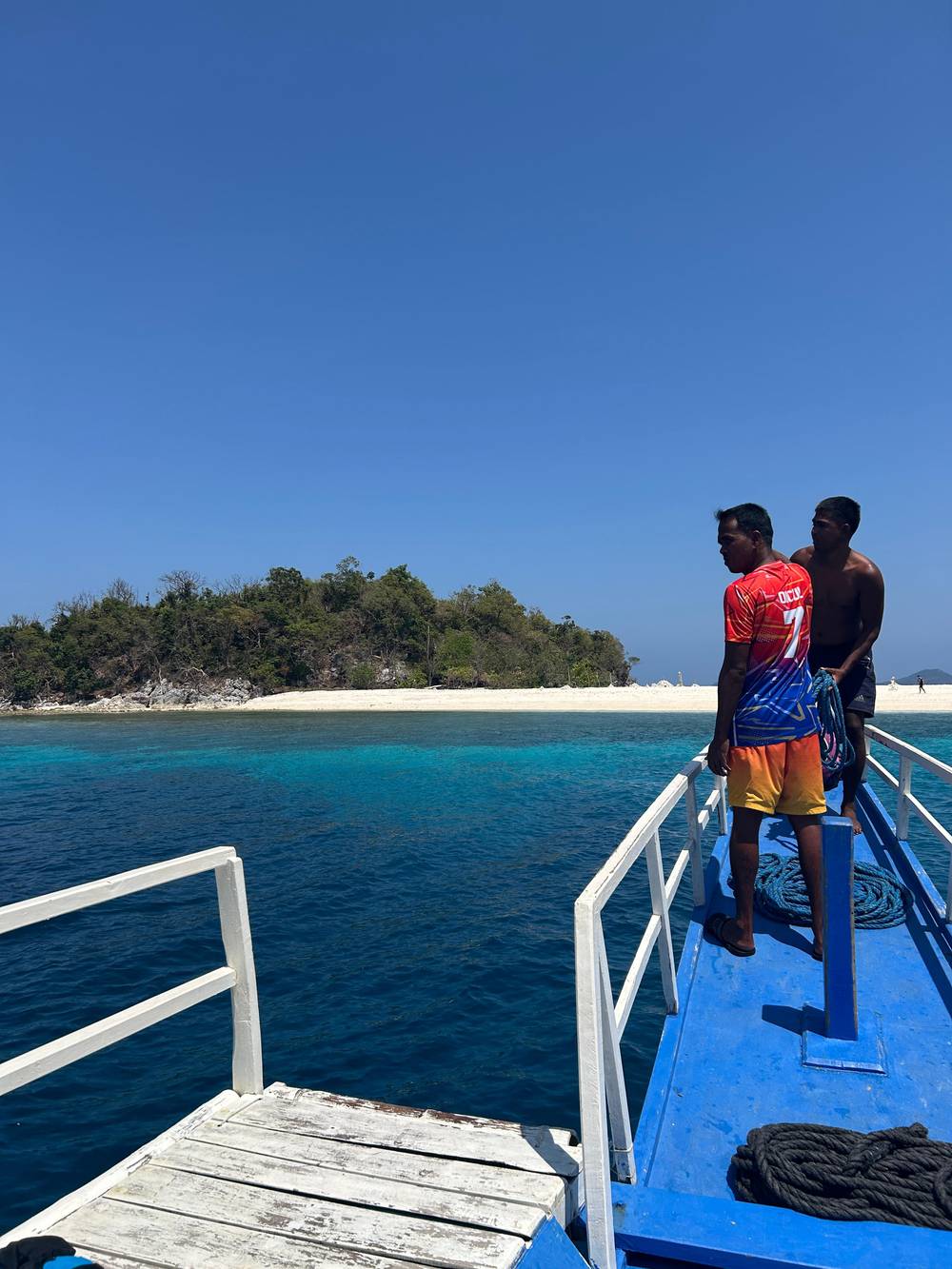
Two Roaming Souls - Jake and Emily on YouTube · The video waits until you tap play to load.
Linapacan, nestled between El Nido and Coron, is a hidden gem in Palawan renowned for its exceptionally clear waters
A boat trip asks for quick-dry clothes. Pack swimwear for every day, a light shirt that dries fast, shorts, a hat and a thin layer for the evening. The record for another crossing tells guests to stay hydrated and to protect themselves from the sun, so bring a refillable bottle and sun protection that you are happy to wash off in the sea. A cap with a chin strap stays on in wind, and a long-sleeved rash shirt covers the shoulders during snorkeling hours.
Footwear is the next question. Sandals with a firm strap, or proper water shoes, cope with rocky landings better than flip-flops, and a pair of light shoes is useful for the pier and the walk to the briefing office. Everything you take on the boat should be able to get wet, and anything that cannot goes into the dry bag or stays in the main luggage. Rinse sandals before the evening so that sand does not move into the hut and the bag.
Weather shapes the packing list too. For the Philippines, PAGASA sets the rains from June to November, the dry months from December to May, and the hottest dry stretch from March to May.2,3 In the rainy months a thin rain jacket is a sensible layer, and a spare dry shirt in the dry bag is a small luxury in any season. Pack a small bag liner for wet clothes, so that damp swimwear does not soak dry clothes before you reach Coron. Nobody should pack for a cruise El Nido to Coron, because this trip asks for sea-ready basics and no evening wear.
FAQ
Main luggage stays on board with no weight limit, and you carry a smaller bag with essentials for the trip.
One record says to bring cash because there are no ATMs at sea and the ETDF fees are cash-only.
El Nido PHP 400, Coron PHP 200, Linapacan PHP 200 and Culion PHP 100, as the 4-day record gives them.
Power is minimal and Wi-Fi is absent.
The native huts have no fan or air conditioning and suit two adults.
One crossing's record advises bringing motion sickness medication.
The record sets the minimum age at 16 years old.
Sources
Planning the island crossing from El Nido to Coron? Ask a real person here.