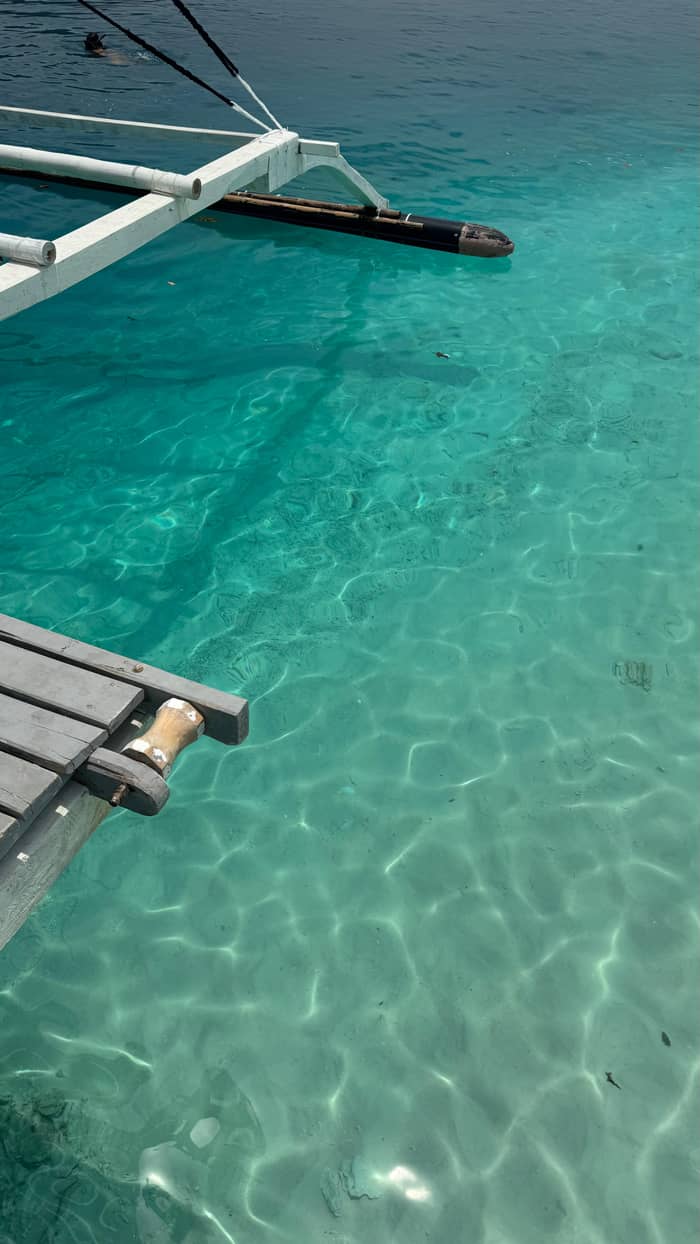
Site's own trip
Short crossing
El Nido to Coron
- Length3 days and 2 nights
- Briefing5 PM the evening before
- ArrivalAbout 4 to 5 PM
- CancelUp to 2 days before
Group price calculator
Summary
The El Nido to Coron 3-day 2-night itinerary covers 3 days and 2 nights by bangka, with a 5 PM briefing the evening before and arrival in Coron in the late afternoon.
The itinerary in brief
Choose from 3 options
Set the number of travelers to compare each crossing's from price.
≈
View≈
View≈
ViewCurrency conversion uses the ECB reference rate on GetYourGuide from-prices. The exact price is displayed when you book.
How the crossing is laid out: the evening briefing, the stops listed for each day, the nights in beach huts, the late arrival in Coron and the weather that moves the plan.
Editorial team, elnidotocoron.quest · Updated November 23, 2026 · Quick read: 9 min
Essentials
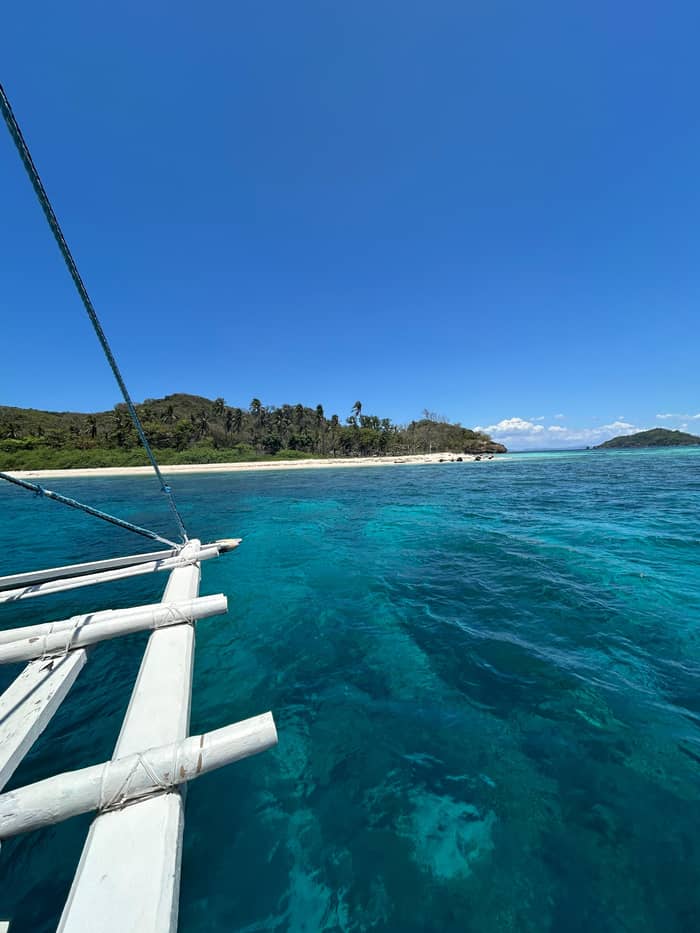
The crossing is a boat trip first and a sightseeing tour second. The site's listing describes 3 days and 2 nights on a traditional Filipino bangka, and it says the crossing can be booked either way round, starting in El Nido or starting in Coron. Nothing about it resembles a day tour with a hotel at the end. The boat is also the luggage store and the transport, and the camps are reached by sea.
The water you cross is a small part of a very large archipelago. The biosphere reserve that UNESCO lists for Palawan takes in the entire province and counts more than 1,700 islands besides the main one.1,2 Linapacan, the municipality between both ends of this trip, counts over 50 islands and islets of its own and stays largely undeveloped.3 That is the kind of coast the boat threads through for most of the way.
People search for this trip in several ways, and the phrase an El Nido to Coron boat trip over 3 days is the one that fits this page. The route is also sold by the day count, so the shorter crossing here sits beside a longer one on the same days of the calendar. Ferry, flight and price questions have their own pages; this one stays with the days themselves and what a traveler does in each of them.
Compare the crossings
| Crossing | Length | Briefing | Arrival |
|---|---|---|---|
| El Nido to Coron, short | 3 days and 2 nights | 5 PM the evening before | About 4 to 5 PM in Coron |
| Coron to El Nido, short | 3 days and 2 nights | 5 PM the evening before | Not stated in the record |
| El Nido to Coron, long | 4 days and 3 nights | 6 PM the evening before | About 4 PM in Coron |
| Coron to El Nido, long | 4 days and 3 nights | 6 PM the evening before | About 4 PM in El Nido |
Every cell is taken from the matching listing record, and the sea can shift any time, so treat the arrival times as approximate.
The trip starts the evening before the boat leaves. The record asks every guest to attend a briefing at 5 PM, and it calls the briefing mandatory. For El Nido departures the operator's office is in Pops District, and for Coron departures it is opposite Jollibee. Treat that appointment as part of day one rather than a formality, because it is where the plan, the rules and the kit are explained.
You travel with two kinds of bag. The big one rides in the boat from start to finish with no stated weight or size cap, and a small day bag holds whatever you need ashore. The operator recommends a secure dry bag. The sea decides how dry anything stays, and a bag that closes properly protects a phone and a passport better than any plastic carrier.
Every guest must have reached 16, the minimum age the record sets. That rule shapes the group: this is a trip for adults and older teenagers who accept simple conditions. Use the last evening before departure to charge every device fully, because the record also warns that power is thin and Wi-Fi absent. A separate checklist page covers the full packing list.
Stops per day
Counts come from the published stop list of another operator's 3-day crossing, which lists 5 stops, 5 stops and 2 stops for its days.
The site's own record gives no list of stops, and this page will not invent one. Another operator's listing for the same crossing does publish a plan, and it is useful as a picture of how such a day can run, with the warning that it belongs to that listing only. Its first day lists 5 stops: Daracotan Island, Tacling Island, Cobra Island, Cagdanao Island and Balenbem Island, where the campsite is.
That list shows the rhythm of the first day. Short hops from island to island fill the daylight, with swimming and snorkeling at several of them, and the day ends on a beach that doubles as the camp. The same record says that the itinerary is a general idea only and that weather or the physical ability of the group can change it before or after the trip begins. Read every stop name in any plan as a hope rather than a promise.
Linapacan sits between El Nido and Coron and is known for exceptionally clear waters, which is how the municipality describes itself.4 The camps sit on islands rather than in towns, so the sea is the only neighbor. The next section follows the second day, which brings a different mix of stops. Expect long horizons here and a long way between landings. Keep your camera in its dry bag until the boat is steady, and enjoy the view first.
Pick your plan
Match your calendar and comfort to a crossing, and the choice becomes simple.
If I have a long weekend
The short crossing
The shorter trip lasts 3 days and 2 nights, so it fits a tight schedule.
If I want a slower pace
The long crossing
The longer trip runs 4 days and 3 nights with an extra day on the islands.
If I end my Palawan trip in El Nido
The reverse crossing
The Coron to El Nido trip finishes in El Nido, with arrival at about 4 PM on the last day of the long version.
If I need a private room and a hot shower
A hotel route instead
The huts have shared toilets and showers, and the record says the trip is not suited to luxury seekers.
Pick your crossing
Site's own trip
El Nido to Coron
Opposite direction
Coron to El Nido
Slower pace
An extra day aboard
The same published plan lists 5 stops for its second day: Bulawit Island for turtle spotting, Asis Island for snorkeling, Double 9 for cliff jumping and kayaking, Inapupuan Island for a village visit and Lobog Island for the second campsite. The mix is wider than on the first day, with a village visit between the water stops. That second day is where the trip feels most like an expedition. The boat spends more time between landings, and the quiet hours between swims are a good time for lunch and rest.
A listing for a Linapacan and Culion route puts it bluntly: its itinerary is a guide, the captain reads the sea, and wind and weather pick the stops. That sentence applies to every boat in these waters. A lagoon you were promised can be swapped for another island at breakfast, and travelers who treat the swap as part of the adventure enjoy the trip more.
Culion is one of the four places whose environmental tickets the Coron to El Nido listing names, along with El Nido, Linapacan and Coron. The crossing therefore touches the local rules of several municipalities in a single day. A traveler cannot see those borders on the water, but the fees follow them, and the packing page lists the amounts the longer crossing record states. Ask the crew at the briefing which fees you have already paid and which you still owe, and keep any receipts together in the small bag.
The trip in order
Evening before
Attend the mandatory briefing, ask your questions, and sort the small bag from the main luggage.
Departure morning
The trip sets off by traditional Filipino bangka, with main luggage stowed on board.
First night
The first night is spent in a native hut on an island camp with a mosquito net.
Second day
Stops can change with the weather, and the captain makes the final call on the route.
Second night
A second night in a hut, with shared toilets and showers on the beach.
Last day
Docking in Coron falls in the late afternoon.
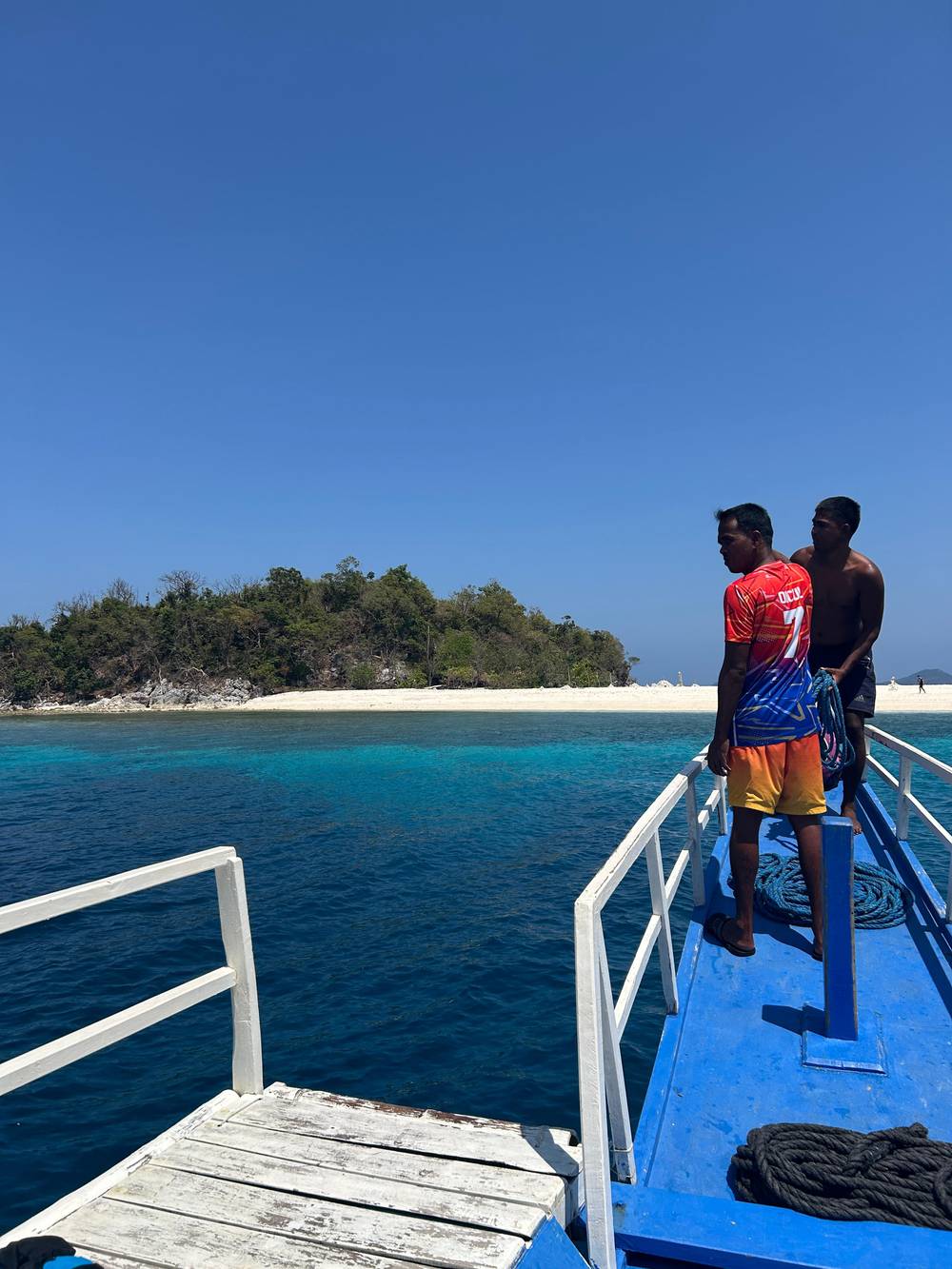
The final day is short on distance and long on mood. That plan lists just 2 stops, Araw Beach for snorkeling and Ditaytayan Island, a long beach with a sandbar, for lunch and a swim, before docking at Coron Port by 4:00 to 4:30 PM. The site's own record allows a slightly longer window for the arrival on its final day. Plan the day as a gentle finish rather than a rush, with a last swim, a lunch on a sandbar if the plan holds, and an unhurried run across the bay toward the pier where the trip ends.
Do not book a flight or a ferry out of Coron for that same evening. The timing is a rough window instead of a promise, and the record words it that way. A hotel night in Coron after the boat gives a margin and a hot shower. The municipality of Coron counts 34 natural sights, with 15 of those lying on Coron Island, run by the Tagbanua people.5 Pack the small bag again before the last leg so that you can step off the boat with everything in one go, and keep a dry layer within reach for the final stretch of open water.
Coron's own history page says the first inhabitants of Coron were the Tagbanuas.6 One account of the name says it comes from the shape of Coron Bay, which looks like an earthen pot.7 Arriving by sea into that bay is a good way to see why. The municipality also points visitors to Mt. Tapyas, which it describes as a place often visited at sunset.8 Take a moment on the pier to look back at the water you have just crossed, and let the trip settle before the next plan begins.
Video
James and Nicole on YouTube · The video waits until you tap play to load.
Linapacan, nestled between El Nido and Coron, is a hidden gem in Palawan renowned for its exceptionally clear waters
Before you board
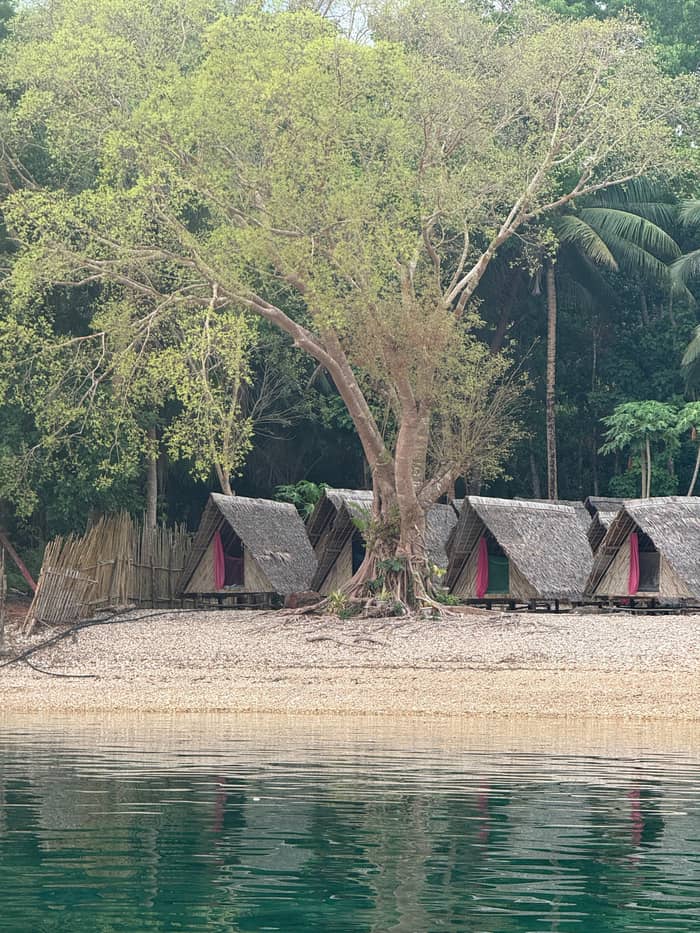
The camps are basic by design. Each native hut is set up with a mattress, pillows, bed linen and a mosquito net for two adults, and nothing in it cools the air. Toilet and shower facilities are shared and not ensuite, and the record says plainly that the trip is not suitable for anyone seeking luxury or constant connectivity. Anyone who needs privacy should look at a hotel route instead.
The reviews are warm. Among the 10 newest English reviews in the record, all 10 give 5 stars and 9 mention the food. The wording of those reviews is theirs and is not repeated here, but the pattern shows in the counts: meals appear in nearly every one. The listing reports 570 reviews averaging 4.7. That is a useful sign, though the sample is small and the listing remains the place to read the full set of recent reviews before you decide on a date and a direction.
Searches for an ultimate adventure tour 3D2N from El Nido to Coron point to this same style of crossing. If your plans allow an extra day, the same operator's longer crossing runs 4 days and 3 nights, with its briefing at 6 PM the evening before and arrival in Coron at about 4 PM on the last day. The extra night adds a day aboard. The comparison table below puts the options side by side so you can decide before you pay. Prices and availability differ for each direction and length, so compare the cards and the calculator on this page before you choose where to begin, and keep a flexible day at each end of the trip.
PAGASA, the national weather agency, puts the rainy season between June and November and the dry season between December and May.9 Within the dry months it separates a cool dry stretch, December to February, from a hot dry stretch, March to May.10 These are national figures, so read them as a general frame for the crossing, not as a forecast for a particular week of sailing.
The same agency stresses that typhoons shape the country's weather.11 At sea that matters more than on land, since wind and swell shape which islands the boat can reach. The record for the Linapacan and Culion crossing says the same thing in plain words: weather and wind decide where the boat goes. Listen to the briefing for the current call, and check conditions before you leave.
The listing asks for a notice of 2 days for a full refund if you cancel, which is a useful margin if a storm is forecast. Ask the operator about its own rule if the weather turns bad before departure. Another record advises bringing motion sickness medication for the trip, which is sensible on any open-water crossing. After that, the only thing left to do is choose a direction and a date.
FAQ
The site's listing describes 3 days and 2 nights by traditional bangka, offered from El Nido to Coron or from Coron to El Nido.
Late afternoon on the final day, in a window of 4 to 5 PM, so keep the evening free.
One other operator lists Daracotan, Tacling, Cobra, Cagdanao and Balenbem on its first day, and the weather can change any plan.
Native beach huts, with bedding and a mosquito net, no cooling and shared washing facilities.
The record calls it mandatory, and the office depends on whether you leave from El Nido or from Coron.
Electricity is scarce on board and Wi-Fi is missing, so top up every device the night before.
The minimum age in the record is 16 years old.
Sources
Planning the island crossing from El Nido to Coron? Ask a real person here.